What Does a DJ Do?
What Does a DJ Do? DJ Role Explained
What does a DJ do? A DJ selects and plays music for an audience, but the job involves much more than simply pressing play. DJs choose tracks, mix between songs, control the music’s flow, and respond to the audience throughout a performance.
Depending on the type of DJ, the role can also involve preparing music beforehand, taking requests, making announcements, setting up equipment, and managing the event’s atmosphere.
A wedding DJ, club DJ and radio DJ may all work very differently. However, music selection remains at the heart of what DJs do.
So, let’s look at what actually happens behind the decks.
What Does a DJ Do With Music?
One of a DJ’s most important responsibilities is selecting music.
A DJ needs to decide:
- What song should play next
- When the next song should begin
- Whether the energy needs to increase or decrease
- Which genres work well together
- How the audience is responding
- Whether a request suits the moment
This is why DJing isn’t simply about having thousands of songs.
A DJ needs to understand their music well enough to make decisions quickly.
For an event DJ, those decisions might change completely depending on the people in the room.
What Does a DJ Do Behind the Decks?
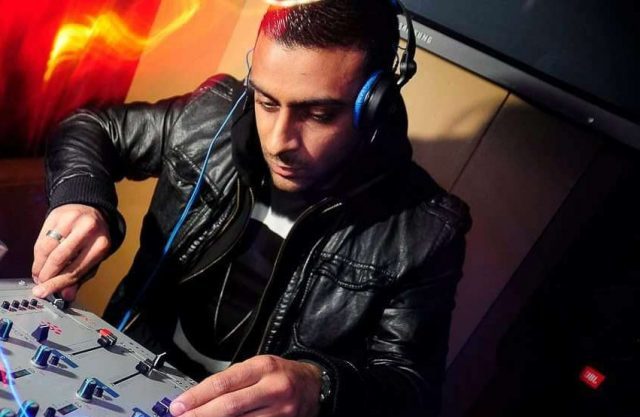
Behind the decks, DJs control how music is played and how one track moves into another.
Depending on their style, this can involve:
- Cueing tracks
- Beatmatching
- Adjusting tempo
- Using EQ
- Controlling volume
- Mixing between tracks
- Using loops
- Adding effects
- Preparing the next song
The goal isn’t always to perform a complicated transition.
Sometimes a simple, well-timed change between two great songs works better than an elaborate mix.
Knowing what the audience needs at that moment is just as important as technical ability.
How Does a DJ Mix Songs?
Mixing allows a DJ to move from one song to another without simply stopping one track and starting the next.
One common technique is beatmatching.
Songs have a tempo measured in beats per minute, usually shortened to BPM. DJs can adjust the tempo of tracks so their beats line up, allowing them to blend together more smoothly.
DJs can also use EQ controls to adjust different frequencies during a transition.
However, not every genre or event requires long, perfectly beat-matched transitions.
Different situations require different mixing styles.
What Does a DJ Do With Headphones?
You’ve probably seen DJs wearing headphones with one ear covered while music is already playing through the speakers.
They’re not simply listening to the same thing as everyone else.
Headphones allow DJs to cue and preview another track privately before the audience hears it.
This can help the DJ:
- Check the next song
- Find the correct starting point
- Match beats
- Prepare a transition
- Check whether two tracks work together
Meanwhile, the audience continues hearing the current song through the main speakers.
What Does a DJ Do Before an Event?
A lot of DJ work happens before anyone reaches the dance floor.
Preparation can include organising music, creating playlists or crates, checking equipment and researching tracks.
For weddings and private events, preparation may also involve speaking with the client about:
- Musical preferences
- Must-play songs
- Songs they don’t want played
- First dances
- Special requests
- Guest demographics
- Timings
- Announcements
Current wedding-DJ guidance consistently highlights this planning stage as part of the job, rather than something that begins when the DJ presses play. Blue Diamond Entertainment
A professional event DJ therefore starts working on the performance before arriving at the venue.
What Does a DJ Do During an Event?
During an event, the DJ constantly makes decisions.
They might begin with relaxed background music while guests arrive before gradually increasing the energy later in the evening.
Once people start dancing, the DJ can watch how the room reacts.
If a particular genre fills the dance floor, they might continue in that direction.
If people begin leaving, it might be time to change things.
This ability to respond in real time is commonly described as reading the crowd.
How Does a DJ Read the Crowd?
Reading the crowd means paying attention to how people respond to the music.
A DJ can watch things such as:
- How full the dance floor is
- Which age groups are dancing
- Which songs get the strongest reaction
- Whether people sing along
- Whether the energy is rising or falling
- How guests respond to a genre change
The DJ then uses those signals when choosing what to play next.
This is one of the biggest differences between a live DJ and a completely fixed playlist.
A playlist cannot see what’s happening in the room.
A DJ can.
What Does a Wedding DJ Do?
A wedding DJ has responsibilities that extend beyond playing dance-floor music.
Depending on the booking, they may provide music for different parts of the celebration, including:
- Guest arrival
- Couple entrances
- First dance
- Parent dances
- Dinner
- Evening reception
- Final song
Wedding DJs may also make announcements or work alongside venue staff, photographers and other suppliers to help important moments happen at the correct time.
The role therefore combines music selection with live-event awareness.
What Does a Party DJ Do?
A party DJ provides music for celebrations such as birthdays, anniversaries and private events.
Party crowds can contain several generations and completely different musical tastes.
One group might respond to current Afrobeats or R&B while another wants 80s, 90s or 2000s classics.
The DJ’s job is to find a balance that works for the people actually attending the event.
Requests can also provide useful clues, although a DJ still needs to decide whether a requested song suits the current moment.
What Does a Club DJ Do?
A club DJ typically focuses heavily on mixing and maintaining the energy of a dance floor.
They may specialise in particular genres such as house, techno, garage, hip-hop or drum and bass.
Rather than playing unrelated songs one after another, club DJs often build sets that have a deliberate flow.
Track selection, BPM, phrasing, transitions and energy management can all influence how that set develops.
What Does a Radio DJ Do?
Radio DJs work differently from event and club DJs.
They may introduce music, speak to listeners, interview guests and present different parts of a programme.
Some radio DJs have more control over music selection than others, depending on the station and format.
The role is therefore often a combination of music presentation and broadcasting.
What Equipment Does a DJ Use?
What a DJ uses depends on the type of DJing they do.
Common DJ equipment includes:
- DJ controller
- CDJs or digital decks
- Mixer
- Laptop
- Headphones
- Speakers
- Microphones
- DJ software
- Lighting equipment
A club may already have decks, a mixer and a sound system installed.
A mobile wedding or party DJ, on the other hand, may need to bring much more of their own equipment.
The equipment is ultimately a tool. Knowing how to use it effectively is what matters.
What Does a DJ Do With Song Requests?
Requests are particularly common at weddings and parties.
A good DJ can listen to requests while still considering the overall event.
That doesn’t necessarily mean immediately playing every song someone asks for.
The DJ needs to consider whether the track:
- Fits the occasion
- Matches the client’s preferences
- Works with the current music
- Is appropriate for the audience
- Will help or hurt the dance floor
Sometimes a great request can completely lift the room.
Other times, the better decision may be to save it for later.
Does a DJ Just Play a Playlist?
No — although DJs may use playlists as part of their preparation.
A pre-prepared playlist follows a predetermined order.
A DJ can change direction.
For example, two events could begin with exactly the same selection of music but develop completely differently depending on how each audience responds.
Professional DJing therefore combines preparation with improvisation.
The music library is prepared beforehand, but many of the most important decisions happen live.
What Skills Does a DJ Need?
Understanding what a DJ does also means understanding the skills behind it.
Useful DJ skills include:
- Music knowledge
- Track selection
- Beatmatching
- Timing
- Phrasing
- EQ control
- Crowd reading
- Communication
- Equipment knowledge
- Organisation
- Remaining calm under pressure
Not every type of DJ requires these skills in the same way.
A radio DJ needs strong presentation skills, while a club DJ may place greater emphasis on technical mixing.
An event DJ needs to combine musical knowledge with the ability to understand a varied audience.
What Does an Infinitive Music DJ Do Differently?
At Infinitive Music, DJing is about more than turning up with equipment and playing a pre-planned list of songs. Every event has its own audience, atmosphere and purpose, so the music should reflect that.
Based in Birmingham, Infinitive Music provides professional DJ entertainment for weddings, private parties, corporate events and special occasions, with the music tailored around the people in the room rather than relying on the same set for every booking.
A major part of that approach is reading the crowd. A playlist prepared before an event can provide direction, but it can’t predict exactly how guests will react on the night. Infinitive’s DJs can adapt the music as the event develops, moving between genres, generations and different levels of energy to keep the atmosphere flowing.
For weddings in particular, the music isn’t only about the evening dance floor. From important entrances and the first dance through to the tracks that get everyone celebrating later in the night, different moments require a different approach.
Infinitive Music also understands that clients want their event to feel like their event. Musical preferences, must-play songs and the overall style of the occasion can all be discussed beforehand, giving the DJ an understanding of what you’re looking for while still leaving enough flexibility to respond to guests on the night.
It’s that combination of preparation, professional DJing and live crowd awareness that separates a tailored DJ experience from simply putting on a playlist.
If you’re looking for a DJ in Birmingham for a wedding, party or special event, contact Infinitive Music to discuss your event and the kind of atmosphere you want to create.
What Does a DJ Do? FAQs
What Does a DJ Actually Do?
A DJ selects and plays recorded music for an audience. They can also mix tracks, prepare transitions, read the crowd, take requests and manage the musical flow of an event.
What Does a DJ Do With the Buttons?
The controls on DJ equipment perform different functions. DJs can use them to cue tracks, change tempo, control volume, adjust EQ, create loops, add effects and move between songs.
What Does a DJ Do With Headphones?
DJs use headphones to privately preview and prepare music before the audience hears it. This can help with cueing, beatmatching and planning the next transition.
What Does a DJ Do at a Wedding?
A wedding DJ can provide music for key moments, manage the evening’s music, read the dance floor, take requests and sometimes make announcements. Their role can begin with planning before the wedding and continue through to the final song.
Do DJs Choose Their Own Music?
Often, yes, although it depends on the setting. Event DJs may combine their own selections with client preferences and guest requests, while club DJs may have greater control over the direction of their sets.
Do DJs Make Their Own Music?
Some do, but DJing and music production are different skills. A DJ primarily selects and performs recorded music, while a producer creates music. Many professionals do both.